.png?width=250&height=73&name=White%20for%20dark%20background%20(tshirt).png "BetterMan")


The REF Toolkit
Developed by BetterMan and The Wellbeing Works in partnership with Crusade with Heart, supported by the Rātā Foundation.
Creating Ripples of Positive Change
When young people learn how to strengthen Relationships, manage Emotions, and have a more Flexible mindset, the impact doesn’t stop with them. It ripples outward – to their whānau, school, and communities.
This toolkit is to help you build on the key tools we shared with students in the workshop:
- Relationships
- Emotion Shifters
- Flexible Mindset
You’ll find:
- A brief overview of the science-based strategies
- Simple ways to reinforce the learning at home or in the classroom
- Recommended resources if you want to dig deeper
Together, we can help students not just cope with challenges – but thrive.
He oranga ngākau, he pikinga waiora.
Positive feelings within you enhance your wellbeing.
.jpg?width=2000&height=1333&name=GettyImages-1501116391%20(1).jpg "GettyImages-1501116391 (1)")
Relationships
Why it matters
Strong social ties are the single biggest predictor of happiness and success, not just at school, but across life.
During adolescence, the brain is especially sensitive to peer influence and social pressures.
When we connect with others – even in small ways – our brains release oxytocin. This feel-good hormone lowers anxiety, improves concentration and focus, and even boosts the immune system. The more connections we make over time, the better we function.

What students learned
Three key ways to increase connection and build strong, supportive relationships:
1. Your VIP: Know Your Go-To-Person
When things get tough, many teenagers (and adults!) isolate or withdraw – just when they most need connection. It’s like staying thirsty because asking for water feels awkward. That’s why we encouraged students to identify a “go-to” person: someone they trust, who listens, and helps them feel safe and supported.
Try this at home or school
Ask your child/student who their "VIP" is.
Encourage them to reach out when things feel hard.
Share who your own go-to-person is — and why.

2. Mix Up Your Crew
Friendships are vital – but to feel truly supported, we need more than just our closest mates.
New research shows that people who regularly connect with a diverse mix of relationship types – like friends, family, teammates, coaches, teachers, and neighbours – report higher wellbeing and life satisfaction than those who only interact with the same small group.
Why? Interacting with different people brings out different sides of us. We ask more questions, show up more fully, and experience more positive emotions – all of which strengthen mental and emotional health.
And for teenagers especially, face-to-face interaction boosts mood more than chatting online. While online connection is better than isolation, it’s real-world relationships that make the biggest difference.
Try this at home or school
Encourage your child/student to stay connected with people beyond their peer group – aunty, neighbour, music tutor, youth worker, counsellor, coach.
Help them seek out chances to talk face-to-face – even small moments of connection matter.
Practice curiosity: Ask questions and discover what you have in common – it helps build trust and confidence.

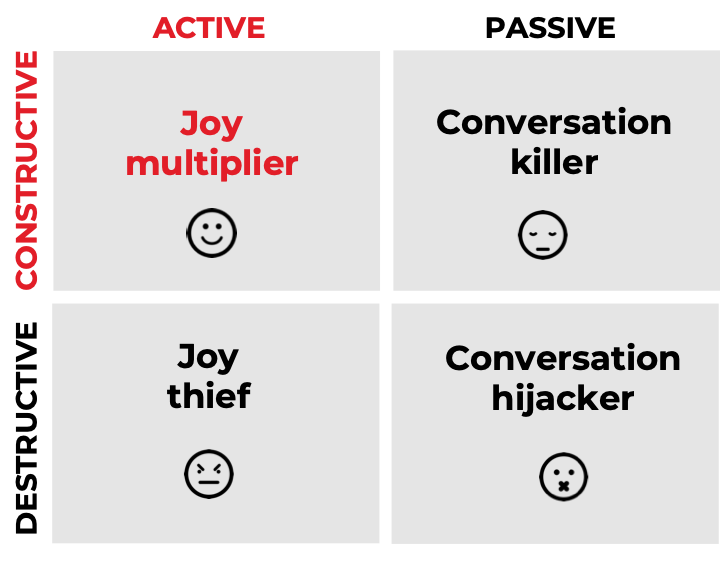
3. Be a Joy Multiplier (Active Constructive Responding)
How we respond to good news matters. Students learned how to be a “Joy Multiplier” – someone who celebrates others’ wins with enthusiasm and interest.
This simple strategy builds deeper friendships, trust, and emotional connection. It’s called Active Constructive Responding, and it’s the only communication style proven to strengthen relationships and boost wellbeing for both people.
For example:
Good news: "I passed the test!"
Joy multiplier: “That's fantastic! I know you were studying really hard for that one! How did you feel when you saw your result? Which bits of the test did you find easiest? How are you going to celebrate?”
(You’re enthusiastic, show genuine interest and maintain eye contact.)
Conversation killer: “Nice one.” (Returns to previous activity)
(You’re positive but understated, lack enthusiasm and don’t encourage further discussion.)
Joy thief: “Was it an easy test? You know the next unit is way harder…”
(You focus on negative aspects or possible problems with the good news, such as questioning the value of the achievement or pointing out potential downsides.)
Conversation hijacker: “Uh-huh. Hey did you watch Love Island last night? I couldn't believe what happened!”
(You ignore or minimise the news, changing the subject or turning the focus back to yourself.)
Try this at home or school
When someone shares good news:
Be present (make eye contact, pay attention, really listen).
Show genuine excitement or enthusiasm.
Ask follow-up questions (e.g. how do you feel? how will you celebrate? what's the best part ...?).
Emotion Shifters
Why it matters
Teenage brains are wired to feel everything more deeply – meaning higher highs, and lower lows. That’s normal. But without the right tools, those emotions can take over.
Learning to recognise, name, and shift emotions gives young people more control.
These tools don’t erase difficult feelings – and that’s not the goal. They give students the tools to navigate them without getting stuck or overwhelmed.
At any age, if we can manage our emotions (so they don’t manage us!) we are better at focusing, handling stress, playing sport, sleeping well, maintaining energy throughout the day, bouncing back from setbacks, and simply enjoying life more.
.jpg?width=2000&height=1333&name=GettyImages-1501080121%20(2).jpg "GettyImages-1501080121 (2)")
What students learned
Four practical ways to shift their emotional state.
1. Create a Pick-Me-Up Playlist
Music is one of the simplest ways to influence how we feel. We suggested students create a playlist that helps them feel the way they want to – whether that’s calm, energised or happy.
Try this at home or school
Ask, "What's a song that lifts you up?"
Create shared playlists for different moods.
Use music to shift energy in the room - to reset, focus, or wind down.
.jpg "Pick me up play list")
2. Clouds Pass: Emotions Don't Last
Some emotions are unpleasant – but that doesn’t mean they’re bad or wrong. Sadness, frustration, anger or fear are part of being human. They often carry useful messages: sadness can show us what we care about, and anxiety can help us prepare for what matters.
But emotions don’t need to control us.
They come… and they go.
It can be helpful to think of unpleasant emotions like clouds passing through the sky. Some are dark and heavy. Some stay longer than others. But none of them last forever.
We shared this key message:
It’s okay to feel. You just don’t want to get stuck in an unpleasant feeling too long – or feel it so intensely it takes over.
Do what works for you – listen to music, take a deep breath or a walk outside, move rooms, talk to a friend, hang out with your pet, write in a journal.
Try this at home or school
Remind students that it's okay to feel, but it’s also okay to take steps to shift their mood.
Encourage strategies that help shift their perspective, like going outside or to a different room, talking to someone, writing or drawing about how they’re feeling, listening to music.
3. Name it to Tame it
Brain scans show that putting feelings into words can calm the emotional part of the brain – making emotions feel less intense and easier to manage.
We taught students that labelling their feelings creates (sometimes much needed) distance between them and the emotion.
Instead of “I am angry” → “I am noticing I’m feeling anger”.
This simple shift works for adults too. It reminds us we don’t have to “be” the emotion, and we don’t have to act on the emotion. We are just experiencing it temporarily. Like a visitor in our home, emotions come and go. We get to decide which ones stay and for how long.
.jpg?width=750&name=3_Flags_GettyImages-1388883687%20(2).jpg "3_Flags_GettyImages-1388883687 (2)")
Try this at home or school
Ask: “What are you feeling? Come up with a couple more words to be more specific (than sad, bad, or mad). The more specific we are, the easier it is to identify what we need and what appropriate action we can take.
Model naming your own emotions: “I’m feeling frustrated because I want this to go well”.
Try the free How We Feel app to practice recognising and naming emotions (it’s also full of really good emotion regulation strategies).
4. Dial Up Positive Emotions
Positive emotions do more than just make us feel good – they help us function better. Research shows they can:
- Strengthen the immune system
- Improve test scores and creativity
- Boost sports performance
- Help the body recover from stress faster
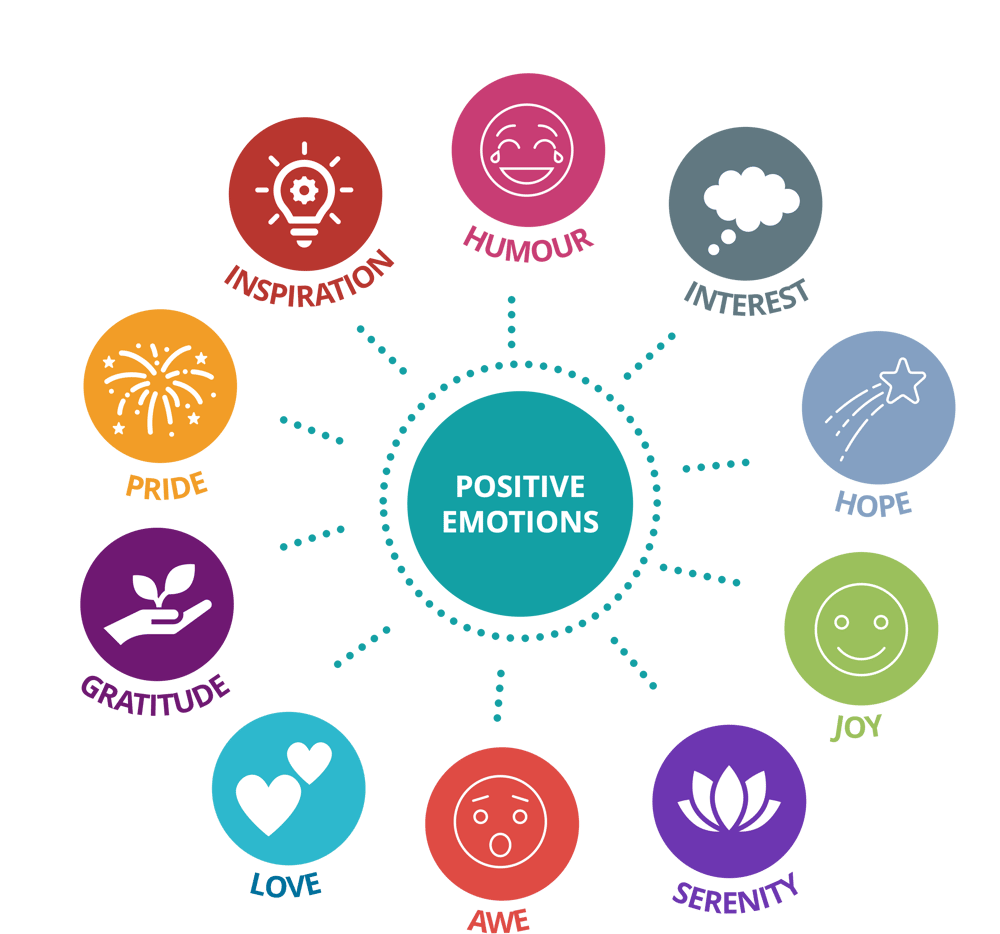
The 10 most useful positive emotions.
But unlike negative emotions – which often tend to linger and feel more intense – positive emotions need to be actively invited in and soaked up. The good news? We can train our brains to notice and amplify them.
Students learned to:
- Spot “glimmers” – tiny, good moments that are easy to miss – the warmth of the sun, a beautiful tree, a kind smile, finishing a task
- Savour the feeling – pause and let it sink in. When we dwell on a positive emotion for just a few extra seconds, we gain more of its benefits.
- Do kind things – because being kind doesn’t just help others – it helps us even more. Kindness activates the brain’s reward system, releasing feel-good chemicals like dopamine and oxytocin. It boosts mood and disrupts spirals of negative thinking.
Even simple acts count: holding open a door, giving a genuine compliment, or shocking your household by washing the dishes unasked 😉
Helping others = helping ourselves.
Try this at home or school
Ask: “What’s something small that made you smile today?”
Encourage one simple act of kindness.
Celebrate the little wins out loud.
Flexible Mindset
Why it matters
Our brains are naturally wired to spot problems – not possibilities. This is called the negativity bias, and while it once helped us survive (by scanning for threats), today it often shows up as harsh self-talk and automatic negative thoughts (ANTs).
For students, this might sound like:
“Why is this so hard? I must be dumb.”
“Everyone else gets it. I’m the only one struggling.”
“I messed up – I’ll probably fail.”
These kinds of thoughts can spiral fast – making kids feel stuck, anxious, or unmotivated. It can really help to remember:
Thoughts are just thoughts. Not facts.
And students can learn to change how they speak to themselves.
That’s one of the tools for developing a more flexible mindset – being able to challenge unhelpful thoughts and shift into a more encouraging, problem-solving mode.

What students learned
Catch Your Inner Critic and Flip It
We helped students notice when their self-talk was harsh or unfair – and taught them to replace it with what we call a Courage Statement.
Instead of:
“I can’t do this.”
Try:
“Get up and go again, Jack – just take the next step.”
“You’re getting there Maia, keep going.”
“You can do hard things, Will.”
Using their own name in this kind of statement (distanced self-talk) helps dial down emotional reactivity in the brain and activate the parts involved in self-control and reflection. This creates a mental shift from feeling stuck to thinking clearly. (It works for adults too!)
Try this at home or school
Help students notice unhelpful thoughts and gently question them: “Would you say that to a friend? If not, maybe your inner voice needs a makeover – less critic, more coach”.
Encourage them to speak to themselves like a supportive coach or friend.
Model this by using your own Courage Statements aloud.
Reinforce that struggle is part of learning – and a flexible mindset helps you get unstuck.
These tools are just the beginning. When young people learn how to take care of their relationships, emotions and mindset, they’re better equipped for life.
Thanks for being part of the ripple.
Ki te kotahi te kākaho, ka whati; ki te kāpuia, e kore e whati.
When we stand alone we are vulnerable, but together we are unbreakable.
Explore More
Podcasts & Videos to Deep Dive
Relationships
TED Talk: What makes a good life? Lessons from the longest study on happiness
Speaker: Dr Robert Waldinger (Harvard Study of Adult Development
Link: Watch on TED.com
A powerful summary of 80+ years of research showing that warm, close relationships are the strongest predictor of health and happiness.
Podcast: Harnessing People Around us to Feel Happier
Speaker: Dr Laurie Santos interviews Dr Ethan Kross in front of a live teenage audience.
Link: Listen on The Happiness Lab
Psychologist Ethan Kross says there are simple things we can do to make our daily interactions a source of fulfilment and joy.
Emotion Shifters
TED Talk: The gift and power of emotional courage
Speaker: Dr Susan David
Link: Watch on TED.com
Susan David explores how avoiding emotions can harm us – and why naming and accepting emotions is key to wellbeing.
TEDx Talk: Educating the whole child (and adult) with emotional literacy
Speaker: Prof. Marc Brackett
Link: Watch on TEDx
How developing emotional intelligence – especially the ability to recognise and regulate feelings – can transform learning, decision-making, relationships, and overall wellbeing.
Podcast: Harnessing Positive Emotions to Create Change
Speaker: Dr Denise Quinlan talks with Sue Langley
Link: NZ Institute of Wellbeing & Resilience
Sue Langley explains why all emotions are important, how frequent experience of positive emotions can build our psychological and physical wellbeing and describes some of the key strategies we can use to increase them.
Flexible Mindset
TED Talk: Do you talk to yourself? Here's how to harness your inner voice
Speaker: Dr Ethan Kross
Link: Watch on TED.com
Ethan Kross explains how our inner dialogue can spiral – or serve us – and how tools like distancing and self-talk help.
Podcast: How to control your inner voice and increase your resilience
Speaker: Prof. Andrew Huberman interviews Dr Ethan Kross.
Link: Listen on Huberman Lab
Ethan Kross explains how to manage your inner voice using science-backed tools like distancing, writing, movement, and music to build emotional resilience.
Backed by Research
Why Relationships Matter
- Strong social ties are the #1 predictor of long-term wellbeing and academic success, even more than IQ or socioeconomic status.
– Harvard Study of Adult Development - Teen brains are wired for connection. During adolescence, the social brain is hypersensitive – peer support helps, but rejection hits harder than at any other life stage.
– Laurence Steinberg, “The Age of Opportunity: Lessons from the new science of adolescence” (2014) - Connecting with others releases oxytocin, a hormone that reduces anxiety and improves focus.
– Shawn Achor, “The Happiness Advantage” (2010) - Social support systems are one of the most effective coping strategies for stressed out students.
– Welle & Graf, 2011, American Journal of Health Education - Studying together is more productive than studying alone
– Richard Light, “Making the Most of College” (2004) - Having a more diverse range of relationship types (e.g. family, friends, acquaintances) predicts greater wellbeing.
– Brooks et al., 2022, PNAS - Teens feel more positive and less lonely after in-person interactions than after virtual ones.
– Achterhof et al., 2022, Computers in Human Behavior - How we respond to others’ good news matters. When people share good news and receive an active, enthusiastic response, they feel more understood, valued, and emotionally connected – which strengthens the relationship.
– Gable et al., 2004, Journal of Personality and Social Psychology - Celebrating success together builds connection. In some cases, receiving a joyful response to good news can feel even better than the achievement itself.
– Gable et al., 2004 - A study at Florida State University taught students to use Active Constructive Responding. Within four weeks, they reported stronger friendships, more gratitude, and increased closeness.
– Woods et al., 2015, Journal of Social and Personal Relationships
Why Emotion Shifting Works
- Naming emotions helps regulate them. Labelling how we feel activates the brain’s thinking centres and reduces emotional intensity.
– Marc Brackett, “Permission to Feel” (2019); Ethan Kross, “Chatter” (2021) - Creating space between you and the feeling – for example, saying “I’m noticing I’m feeling anxious” instead of “I’m anxious” – builds emotional distance and self-control.
– Ethan Kross, University of Michigan Emotion & Self-Control Lab - Positive emotions broaden our attention and build resilience. They improve problem-solving, support immune function, and help us recover from stress.
– Barbara Fredrickson, “Positivity” (2009); Fredrickson & Tugade, 2004 - Acts of kindness boost happiness. Doing kind things for others improves our own wellbeing – often more than doing something for ourselves.
– Sonja Lyubomirsky, “The How of Happiness” (2007)
- Emotional agility helps us avoid getting stuck. Learning to notice, accept and shift our emotional state builds long-term wellbeing and psychological flexibility.
– Susan David, “Emotional Agility” (2016)
Why Flexible Thinking Builds Resilience
- Negative thoughts hit harder than positive ones. Our brains are wired to focus on problems – a “negativity bias” that makes unhelpful thoughts feel more true or urgent than they really are.
– Baumeister et al., 2001; Rozin & Royzman, 2001 - Automatic negative thoughts (ANTs) can fuel anxiety, self-doubt and rumination – especially in adolescence. Recognising and challenging these thoughts improves emotional wellbeing.
– Beck, 1979; Leahy, 2015 - Using your own name in self-talk (“You’ve got this, Josh”) helps people regulate emotions and think more clearly under stress. It creates psychological distance, activating brain regions involved in self-control.
– Ethan Kross, “Chatter” (2021); Kross et al., 2014; Moser et al., 2017 - Courage statements and supportive self-talk are simple but powerful ways to interrupt spirals of self-criticism and reframe challenges.
– Kross, 2021; Brion et al., 2013 - A growth mindset – the belief that abilities can improve with effort – builds motivation, reduces fear of failure, and helps students bounce back from setbacks.
– Carol Dweck, “Mindset” (2006); Yeager & Dweck, 2012
Our Team
The REF workshop developed by
Ged Robinson
Ged brings over a decade of professional sports experience and a unique perspective on the importance of growth, adaptability, and resilience. As the Canterbury Sports Development Programme Manager at Tātai Whetū Waitaha, Ged plays a pivotal role in supporting rangatahi (youth) to thrive through sport. He works closely with young athletes to equip them with the tools and support they need to succeed, both on and off the field.
Through BetterMan, the charity he co-founded, Ged is committed to sharing the lessons he has learned from his own sports career and his work in youth development. His passion for fostering connection, growth, and healthy competition makes him a perfect fit for delivering engaging, impactful workshops to young people. Ged has a natural ability to relate to youth and understands the importance of creating spaces where they feel supported, heard, and inspired to become better versions of themselves.
Beyond his professional work, Ged is driven by a love of competition, fitness, and creating memorable experiences through food with his family and friends. He is deeply motivated to make a positive impact on youth by helping them build resilience and confidence, skills they can carry into their future.
“Everyone has dreams, wants to be the best version of themselves and succeed in their chosen field – my calling is to help people on this journey.”
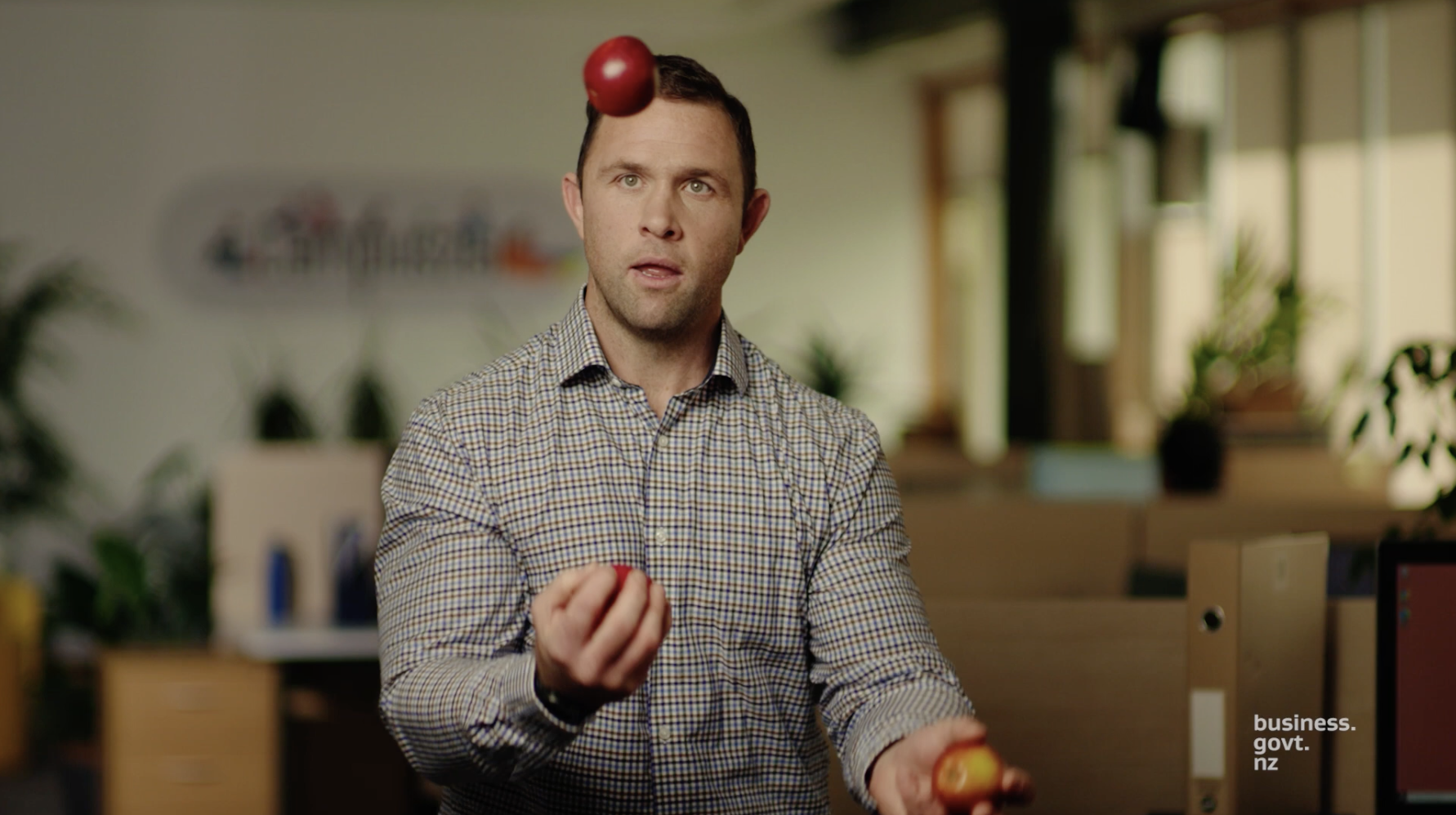
Todd Astle
With 18 years of experience as a professional cricket player, representing both Canterbury and the New Zealand Black Caps, Todd brings a wealth of personal insights into the challenges and triumphs of elite sport. His journey has shaped his understanding of resilience, mental skills, and the importance of wellbeing. These experiences have inspired Todd to co-found BetterMan, a charity aimed at improving men's mental health, wellbeing and fostering connection.
Todd's expertise in mental skills coaching, developed through his business Innerspin, allows him to effectively engage youth, helping them understand the value of mindset, mental resilience, and personal growth. His workshops are rooted in practical, evidence-based strategies that empower young people to perform better, not just in sports but in all aspects of life.
A father of two, Todd is deeply committed to creating workshops that resonate with young people, blending fun, competition, and meaningful conversations. He has the unique ability to connect with youth through both his sports background and his passion for wellbeing.
“Small actions, repeated over time, transform us”.
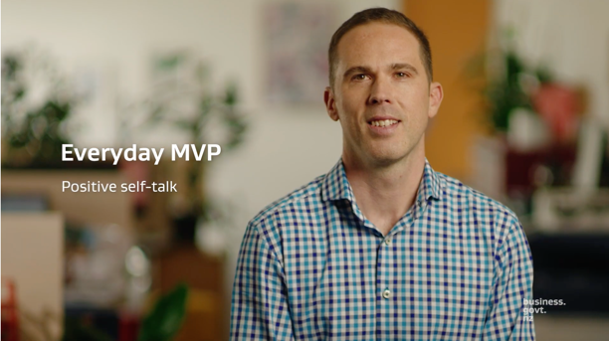
Kim Tay
Kim founded The Wellbeing Works to bring together a team of experts specialising in wellbeing, initially focusing on the workplace. With a background in qualitative research, Kim discovered the emerging field of positive psychology in 2005 and saw its potential to transform lives. Since then, she has dedicated herself to delivering engaging, evidence-based tools and techniques from this rapidly growing area of psychology to diverse audiences in Aotearoa and around the world.
As a former director of online training at the NZ Institute of Wellbeing & Resilience, Kim’s initial focus was workplace wellbeing, but she has increasingly been called upon to work with schools, developing workshops that support teachers and students alike. Her ability to translate scientific concepts into practical, entertaining sessions ensures that participants walk away with valuable, applicable insights.
Kim’s understanding of the challenges young people and parents face goes beyond the academic. She and her husband are grateful that her two daughters have (so far) survived adolescence relatively unscathed (excluding damage to family vehicles). This, along with her deep empathy for the struggles of parenting, makes her particularly adept at designing and delivering engaging workshops for youth.
Her delivery style – full of energy, humour, and insight – ensures she connects with any audience, whether it's teachers, students, or business professionals. Her mission is to make wellbeing relatable and actionable.
"The greatest gift is when a shift in mindset not only transforms an individual but ripples out to create a positive impact on the people around them."
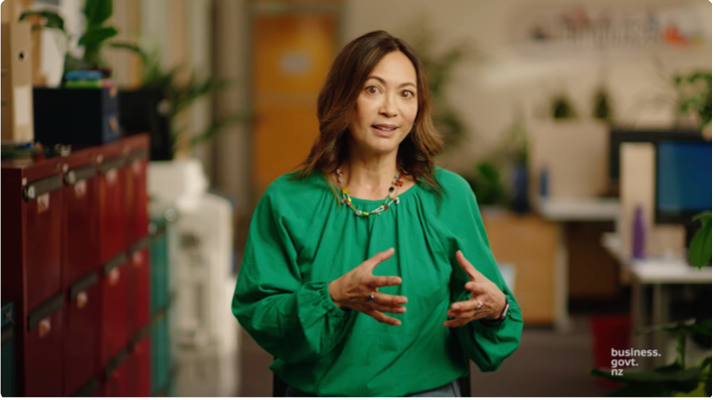
Adrienne Buckingham
Adrienne is a gifted communicator who makes the science underlying our workshops come alive with real-world language, case studies and engaging stories.
Adrienne has spent over 17 years working with adolescents and their families in NZ and internationally. Throughout her career, she has been a dedicated pastoral care practitioner, focusing on behaviour management, student wellbeing, and supporting staff.
Faced with the challenges of helping young people navigate the 21st century, it became clear to her that best-practice teaching must be complemented and enhanced by research-informed strategies for wellbeing. To that end, Adrienne has recently completed her Master’s in classroom wellbeing interventions.
In addition to designing and facilitating wellbeing workshops, she is a senior lecturer teaching Health and Wellbeing in the Bachelor of Social Service at Te Pūkenga Otago Polytechnic.
Beyond her professional expertise, Adrienne's experience as the mother of three daughters gives her firsthand insight into the challenges and joys of raising young people in today’s world. Additionally, her involvement as a volunteer in the roller derby community brings a unique perspective, combining her passion for supporting youth with the energy and camaraderie of team sports.
"When we know better, we do better.” – Maya Angelou"